

Selling made-to-order: e-commerce for a 3D-print studio
When every item is printed after it’s bought, the storefront has to sell, customize, and fulfil — not just list.
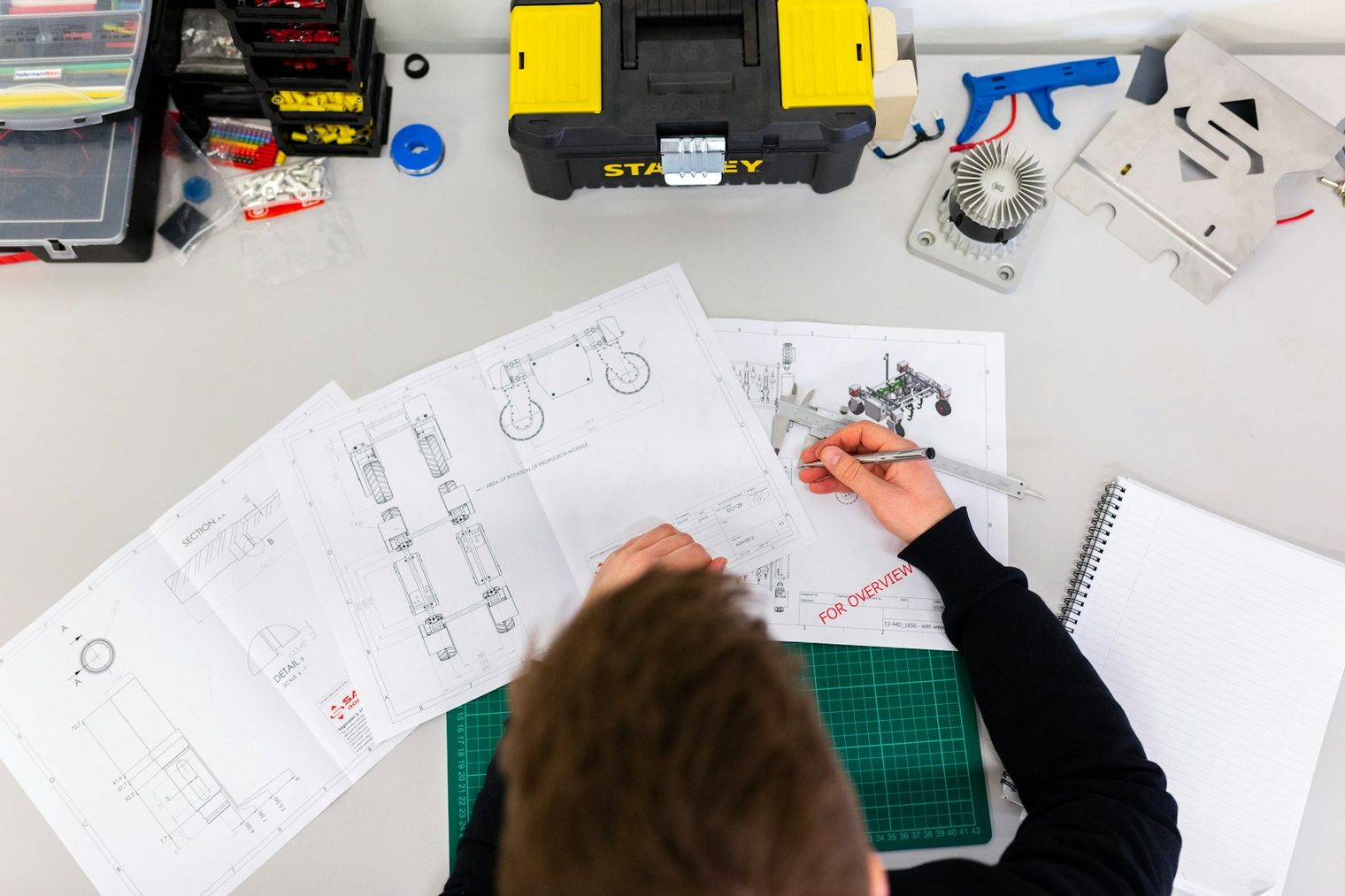
Made-to-order e-commerce breaks the assumptions a standard storefront is built on. There is no shelf of stock, no inventory count to decrement, and no item to pick and pack — production starts when the order does. That shifts work onto the storefront that a stock catalogue never has to do: let the customer configure the product and see what they are getting, price each variation honestly as options change the cost of making it, promise a date the workshop can actually keep, and keep the customer informed across a fulfilment window measured in days rather than hours. The lead time is the defining constraint, and it is the one thing a standard checkout has no vocabulary for: it quotes transit time when the customer needs production time plus transit. Handled well, the wait becomes the reason a piece feels worth waiting for; handled badly it is the objection no amount of paid traffic will outrun.
What breaks when you use a standard store?
Four things, and they compound.
Inventory logic is meaningless. Stock counts, low-stock warnings and back-in-stock flows are all built around a shelf you do not have. What you actually need to model is capacity — how many units the workshop can produce this week — which is a different constraint entirely and one that no default store models for you.
Variants explode. A stock product has a handful of SKUs. A configurable one has a combinatorial space: three sizes, eight colours, custom text and two finishes is hundreds of permutations, most of which will never be ordered. Pre-generating them is unworkable; you need pricing computed from the option set instead.
Shipping estimates lie. Standard checkouts quote transit time. Your customer needs production time plus transit time, and the difference between “3–5 days” and “12–14 days” is the difference between a complaint and a satisfied customer.
Returns are not returns. A personalised item cannot be resold, so the usual policy does not apply. That has to be stated clearly before purchase, not discovered after.
Why does the configurator decide the conversion rate?
Because it is where doubt is resolved. On a stock product, photography does the reassurance work — the thing in the picture is the thing that ships. On a personalised product, the photo shows somebody else’s version, and the customer is being asked to imagine theirs.
A live preview closes that gap. Render the actual configuration — the customer’s text, in the chosen colour, at the chosen size — and the page stops being a description and becomes the product. Price updates as options change, so cost is never a surprise at checkout. Constraints are enforced in the interface rather than discovered later: if a finish is unavailable in a colour, the combination should not be selectable.
Get the details right and the configurator does more than convert. It reduces production errors, because the customer has approved exactly what will be made, and it cuts the support load of clarifying orders by email.
How do you handle lead times without losing the sale?
By being specific early. A vague “made to order, please allow additional time” in the footer reads as evasion. A stated production window on the product page, before the cart, reads as a workshop that knows its own capacity.
Three things make it work. Show the estimate at the point of choice, not at checkout, and update it if the configuration changes the build time. Quote a range you will beat rather than a best case you will miss — the cost of an optimistic date is a support ticket and a lost repeat customer. And separate production from dispatch in every communication, so “your order is in production” and “your order has shipped” are distinct events the customer can follow.
Bulk and corporate orders deserve their own path. Somebody ordering 200 units with a company logo has different needs — approval on a proof, a quote, an invoice, a fixed delivery date — and pushing them through the retail checkout loses the largest orders you will get.
Why is the post-purchase experience the real product?
Because with a stock item the wait is short enough to ignore, and with made-to-order it is the majority of the customer’s experience. For ten days they are not using the product; they are waiting for it, and what they hear during that window is the entire relationship.
Order tracking from print to doorstep is the minimum. Beyond that, the wait is an opportunity most studios waste: a photo of the piece coming off the printer, a note when it enters finishing, a dispatch confirmation with a real tracking number. It costs almost nothing and it converts a delay into anticipation. Made-to-order brands live on repeat purchases and referral, and both are decided in that window rather than at checkout.
What should you build first?
In order: the configurator with live preview and honest option-based pricing, then production-aware lead times shown before the cart, then order tracking and the notification sequence, then the bulk and corporate flow. Marketing comes after all four — driving traffic to a storefront that cannot answer “what will mine look like and when will it arrive” is the most expensive way to learn what is missing.
If you are building one, our e-commerce development service covers the storefront and our web applications work covers the configurator and order-management side. A B2B version of the same problem — a large catalog where the browse has to end in an enquiry rather than a cart — is in the Kunal Enterprises case study. And since a configurator adds real weight to a product page, the Core Web Vitals post is worth reading before you ship it.